The Big Picture: How Beer Styles Are Defined
In order to begin the discussions on the individual families it is necessary to understand the division of beer into styles. The categories upon which the different beer styles can be divided are fermentation process followed, yeast action used, and mass acceptance are the major components, but still water quality, the maker’s handling of malt, the treatment of hops, and the time and circumstances under which the beer is bottled also aid in this classification. No single element governs the style of beer on its own.
Styles are present to help in the generalising of situations and not controlling the innovative aspect of things. Most of the historical names like these have been coined long after the beers themselves, and only after people in different geographical areas got to know of each other’s beer brewing secrets.
Fermentation Method and Yeast Behavior
What defines beer styles at the broad levels is divided by how yeast ferments sugars. Some yeasts work at warm temperatures and rise to the top of the fermentation vessel, while some prefer cooler conditions and settle more slowly. These behaviors determine not only alcohol production, but also the formation of aromatic flavor-composing esters, phenols, and others.
Warm-fermented beers usually produce fruitier or more expressive aromas and cool-fermented beers bring about clarity and such crisp malt character. That difference is what lays out the foundation for a lot of the larger groupings of beers.
Ingredients and Their Proportions
Water, malted grain, hops, and yeast all play distinct roles, but the balance between them is what defines a style. A beer with a high proportion of lightly kilned malt will taste very different from one built on roasted grains, even if both use the same yeast. Hop variety, timing, and quantity further shape bitterness and aroma.
Historically, ingredient choices were shaped by geography. Over time, these local solutions hardened into recognizable styles that are still referenced today, even when brewed far from their place of origin.
Process, Conditioning, and Age
Beyond fermentation, factors like conditioning time, carbonation level, and maturation environment influence how a beer feels and tastes. Some styles are meant to be consumed fresh, while others develop complexity through extended aging. Filtration, pasteurization, and modern handling techniques also affect texture and stability.
These process decisions are often invisible to the drinker, yet they quietly define why two beers with similar ingredients can feel completely different in the glass.
Lagers: Clean Fermentation and Subtle Balance
Lagers make up a large share of global beer consumption, yet they are often misunderstood as being simple or uniform. In reality, lager brewing demands precision, as fewer fermentation byproducts mean fewer places to hide flaws. The result is a family of styles that emphasize balance, clarity, and drinkability.
Although many lagers are light in color and body, the category also includes darker, malt-forward examples with surprising depth. What unites them is a cool fermentation process and extended conditioning period that refines flavor and texture.
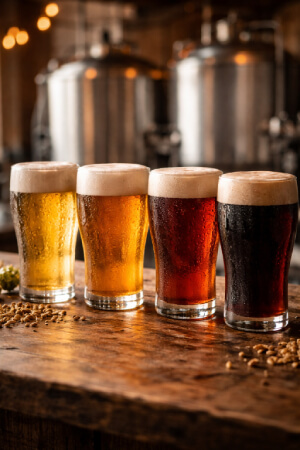
Light and Pale Lagers
Pale lagers are built around lightly kilned malts that contribute subtle bread or grain notes without heaviness. Bitterness is usually restrained, supporting refreshment rather than assertiveness. Carbonation tends to be moderate to high, enhancing crispness.
These beers are designed for consistency and approachability, but well-made examples still show careful control of malt sweetness and hop balance.
Amber and Dark Lagers
Darker lagers rely on toasted or roasted malts to introduce flavors of caramel, nuts, cocoa, or crusty bread. Despite their deeper color, they often remain smooth and clean, avoiding harsh bitterness or heaviness.
The contrast between rich malt flavors and a dry, clean finish is a defining feature of this group, highlighting how fermentation character can shape perception.
Strong and Specialty Lagers
Some lager styles push strength and intensity further, with higher alcohol levels and fuller bodies. These beers may undergo longer aging to soften alcohol warmth and integrate flavors. Even at higher strength, balance remains a guiding principle.
These styles demonstrate that lager brewing is not limited to lightness but can support complexity and longevity when handled carefully.
Ales: Expressive Yeast and Broad Diversity
A large and diverse group of beverages come under the heading of ales and they are all characterized by the warmer fermentation and the presence of more expressive yeast strains. Ales tend to be flavoured with fruits, flowers or spices through fermentation, as opposed to lagers, giving a more complex taste.
There are more opportunities for innovation in ale making than in lager ones, simply because the fermentation regime of ales is essentially less consistent due to several factors. It is within the category of ale that traditional practices and contemporary techniques thrive.
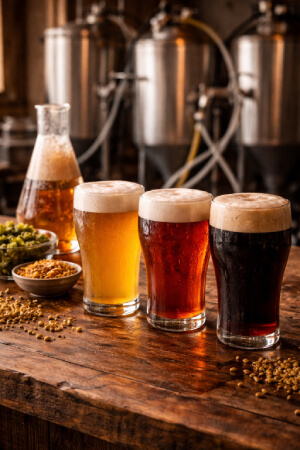
Pale Ales and Bitters
Pale ales strike a balance between malt backbone and hop presence. Malt flavors often suggest biscuit or light caramel, while hops contribute bitterness and aroma without overwhelming the base beer. Yeast character may add subtle fruitiness.
These styles are often judged on harmony rather than intensity, rewarding careful recipe design and fermentation control.
Brown Ales and Porters
Darker ales lean more heavily on roasted and specialty malts, producing flavors of chocolate, coffee, and toast. Mouthfeel can range from light and dry to round and velvety, depending on grain choice and fermentation profile.
Despite their richness, many remain highly drinkable, especially when bitterness and sweetness are kept in check.
Strong Ales
Strong ales increase alcohol content and body, often introducing warming sensations and complex layers of malt sweetness, dried fruit, or spice. These beers may benefit from aging, which allows flavors to meld and soften over time.
They show how ale fermentation can support depth and intensity without relying solely on hops or roast.
Wheat and Mixed-Grain Styles
Wheat beers and mixed-grain styles highlight how changing the grain bill alters texture and aroma as much as flavor. Wheat contributes proteins that enhance head retention and mouthfeel, often resulting in a softer, fuller impression.
These beers are found in many brewing traditions and can range from refreshing and light to rich and complex, depending on yeast and fermentation choices.
Light Wheat Beers
Many wheat styles emphasize freshness and approachability. Yeast may produce gentle fruity or spicy notes, while hops remain understated. The result is a beer that feels lively and smooth, often with a cloudy appearance.
These beers are commonly enjoyed young, when their delicate aromas are most vivid.
Darker and Stronger Wheat Styles
Some wheat-based beers incorporate darker malts or higher alcohol levels, creating deeper flavors of bread, caramel, or fruit. Fermentation character often plays a larger role, adding complexity.
These styles illustrate how wheat can support structure and richness beyond simple refreshment.
Sour, Wild, and Mixed-Fermentation Beers
Sour and wild beers expand the idea of what beer can taste like by introducing acidity and unconventional fermentation organisms. Rather than relying solely on brewing yeast, these beers may involve bacteria or wild yeasts that produce tartness and layered aromas.
Historically rooted in regional practices, these styles have gained renewed interest as brewers explore controlled complexity.
Lightly Sour Styles
Some sour beers aim for gentle acidity that refreshes rather than dominates. The sourness acts like a seasoning, sharpening fruit or malt notes without overwhelming them.
These beers often feel bright and crisp, making them approachable even for drinkers new to sour flavors.
Complex and Aged Sour Beers
More intense sour styles may undergo long aging, allowing multiple organisms to interact over time. Flavors can evolve toward funk, earthiness, or oak influence, with acidity integrated into a broader profile.
These craft beers reward patience and careful production, showcasing fermentation as a creative tool.
Modern Hybrids and Emerging Styles
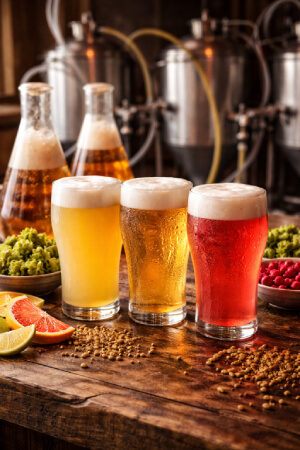
In modern brewing practice, distinctions have considerably softened, thereby allowing establishments to create combinations of styles through combinations of various techniques, components, or yeast strains taken from various groups.
Hybrid Fermentation Approaches
Some modern beers use ale yeast at cooler temperatures or lager yeast at warmer ones, producing profiles that sit between established families. The result can be clean yet expressive, challenging simple classification.
These approaches highlight fermentation temperature as a spectrum rather than a strict rule.
Ingredient-Driven Innovation
New hop varieties, alternative grains, and novel processing methods continue to expand stylistic possibilities. While these beers may resist easy labeling, they still rely on foundational principles of balance and fermentation control.
Understanding traditional styles provides a framework for appreciating how these innovations diverge and why they work.
What Shapes a Beer’s Character
Beer styles can feel overwhelming, but most differences trace back to a small set of decisions made during brewing. Keeping these factors in mind makes it easier to understand unfamiliar styles without memorizing names or histories.
- Yeast choice and fermentation temperature
- Malt selection and degree of roasting
- Hop variety, timing, and bitterness level
- Water composition and mineral balance
- Conditioning time and carbonation
By focusing on these elements, styles become descriptive tools rather than rigid boxes, helping explain why beers taste the way they do.
How to Read Beer Style Names Without Overthinking Them
Beer varieties can sound scholarly, or even off-putting, in their names, they serve as interpretation rather than definitive barriers; in broad strokes, names shall also set out the strength, fermentation, and balance one can expect from the beer and perhaps not so much precise flavor details.
Considering styles does not mean having imperatives or stereotypes. Encourages rather more a look at how the beer, when it is in a particular style, activates and elaborates certain elements of the whole. Rather than asking how a beer should be classified, whether it is or is not so designated, activational studies suggest examining which components of the model there are and the role they play in the communication.
The Language Behind the Glass
Understanding the diverse range of beer styles involves less rote learning than it is about processing in how the various options in fermentation, ingredients, and manufacturing influence one’s sensory perception. Lager, ale, Weizen, apple sour, Kettle, there are many more types of renaissance beers that address the common objective transforming grain into desirable form of expression.